Otter vs Mink: How to Tell Them Apart in the Field
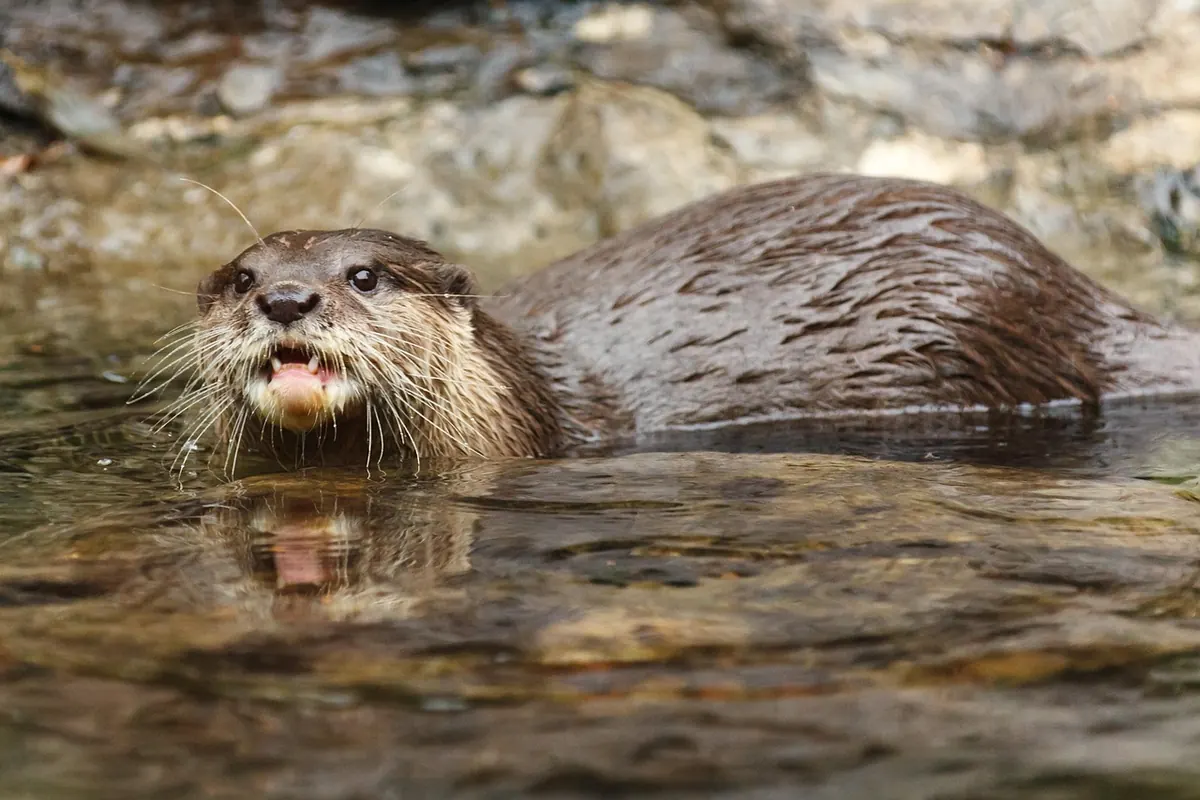
The shape slides off the bank and vanishes with barely a ripple. A minute later it surfaces twenty metres downstream, dark and sleek, and you are fumbling for your binoculars. Otter or mink? Both are long-bodied, brown and fond of water, and at distance they can look remarkably similar. The clues are there, though — in size, in the way they swim, in the prints they leave and in what they leave behind. Here is what to look for, and the order to look for it in.
Start with size, because size rarely lies
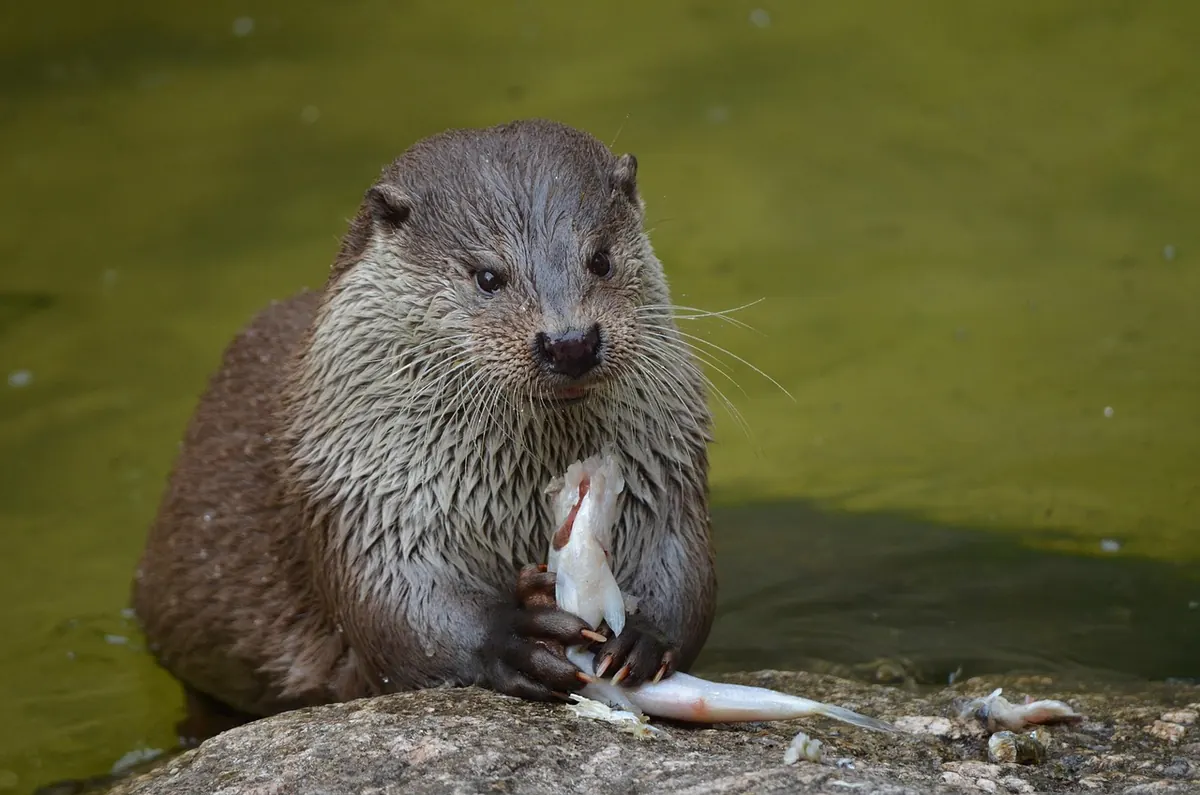
An otter is a big animal. Head and body run 60–80 cm, with another 35–45 cm of tail, so a nose-to-tail adult is roughly the length of a golden retriever. Females sit around 5–8 kg; a large male can top 10 kg.
An American mink is about a quarter of that. Body 35–45 cm, tail 15–25 cm, weight typically 0.7–1.5 kg — a slim, low-slung animal, not much bulkier than a large rat, though longer. If you are close enough to compare it with something familiar, ask whether it looks more like a small dog or a ferret. That single judgement settles most sightings.
Face, fur and tail
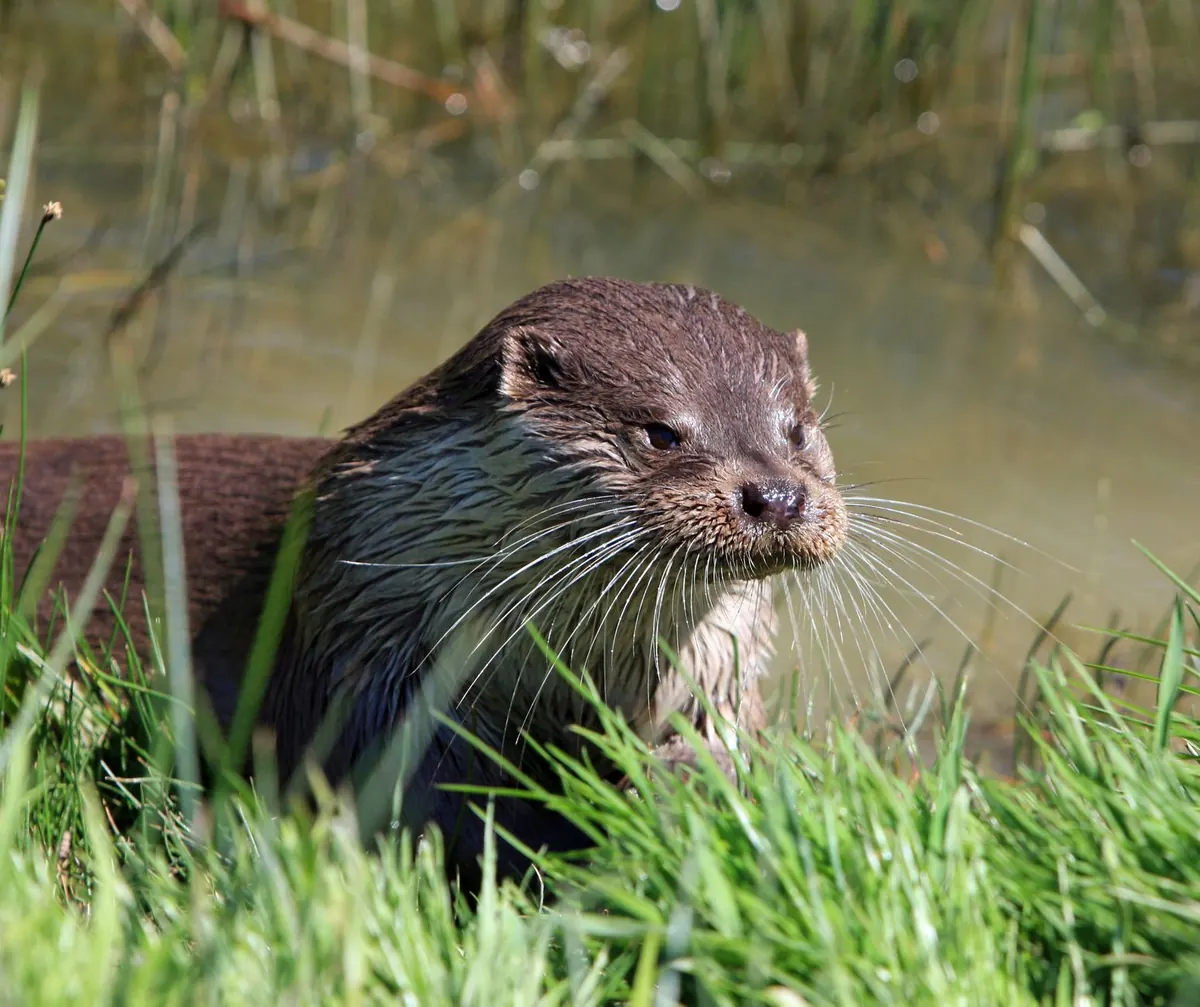
Otters have broad, flat-topped heads with small ears set low and wide, and a blunt, whiskered muzzle. There is no white marking on the chin. The fur is short, dense and oily, dark brown above and paler below, and it lies flat and sleek when wet, as though the animal has been varnished.
Mink are dark brown too, but look for a white chin patch. Many have additional irregular white spots on the throat, chest or belly — never neat, never symmetrical. Their faces are smaller and more pointed, and the tail is thinner, roughly a third of the body length and often dark-tipped. An otter's tail is thick at the base, muscular and used for propulsion; you notice it.
One more confusion species worth ruling out: polecats and ferrets. These are more bandit-masked, with paler guard hairs and a fluffy look. If it is on dry land beside a hedgerow, well away from water, think mink or polecat rather than otter.
In the water: how they swim
This is where the two diverge most sharply, and it is visible at long range with binoculars.
- Otters swim low. You usually see a head and a hump of back, nothing more, with a clean V-shaped wake behind.
- Otters dive in a rolling arc. Head enters first, the back arches, the tail flips up last. It is fluid and deliberate.
- Mink ride high. The whole back, often the shoulders and a good deal of body, stays above the surface.
- Mink paddle busily. The movement looks effortful and dog-like, with a bigger, messier bow wave and less inclination to stay under.
Watch what happens at the bank, too. An otter tends to slide or pour out of the water and disappear into cover. A mink usually scrambles out, then shakes itself like a terrier and trots off along the edge. Otters will also use the same exit points repeatedly, leaving smoothed mud slides down steep banks.
Tracks and trails
In soft mud, sand or a dusting of snow, prints are decisive — if you carry a ruler. Photograph them from directly above with something for scale.
Otter prints are large: a hind foot pad is roughly 6–8 cm across, with five toes spreading in a broad star. Webbing is sometimes visible between them. The walking gait leaves a distinctive pattern of four prints with, often, a tail drag mark running through the middle.
Mink prints are much smaller, around 2.5–4 cm, neater and more compact. Because mink bound, the tracks come in pairs or groups of four rather than a steady diagonal walk. You will also find mink tracks well away from water — along field margins, around poultry runs, on garden paths.
Droppings: the giveaway on a boulder
Otters leave spraint, and they leave it somewhere conspicuous: a flat rock, a tussock, a bridge ledge, a jetty. It is dark, tarry, often tapering, and usually full of fish bones and scales, sometimes crab or crayfish fragments. The smell is the famous part — sweet and musky, closer to hay or jasmine tea than to anything foul. Repeated use builds up obvious spraint sites.
Mink scat is smaller, more twisted and rope-like, and often contains fur, feathers and small mammal bones. It smells plainly faecal and ranker than spraint. It is frequently deposited on a log or stone, but also mid-path, on flat roofs or in outbuildings.
Do not pick droppings up in bare hands. Use a stick, photograph what you find, and wash thoroughly afterwards.
Getting a good enough look
Choose a calm, still evening and a vantage point with a clear view of water, then sit down and wait. Twenty minutes of stillness beats an hour of walking. Stay downwind, keep your silhouette broken, and keep conversation to a minimum.
If you are watching after dark, a red-filtered torch is less alarming than white light. Binoculars of 8x42 are ideal for the last half hour of daylight, and most records are made in that window. Sea otters in Shetland and along the west coast are more often active by day, following the tide, so coastal watching needs no such patience.
Recording what you see, and checking before you act
Write it down while it is fresh: date, time, six-figure grid reference, whether the animal was in the water or on land, and which features you actually saw as opposed to assumed. A photograph with a scale — even a bank card, or a boot — turns a probable record into a useful one. Send records to your county mammal recorder or local records centre.
Otters are protected by law across the UK, and disturbance, or damage to a holt or resting place, can be an offence. If you suspect there is a holt nearby, keep well back and watch from a distance. Never release a mink into the wild; it is an offence, and mink are a serious predator of water voles and ground-nesting birds. If you are planning a survey, or any work near a watercourse where otters may be present, take advice from the relevant statutory conservation body first.